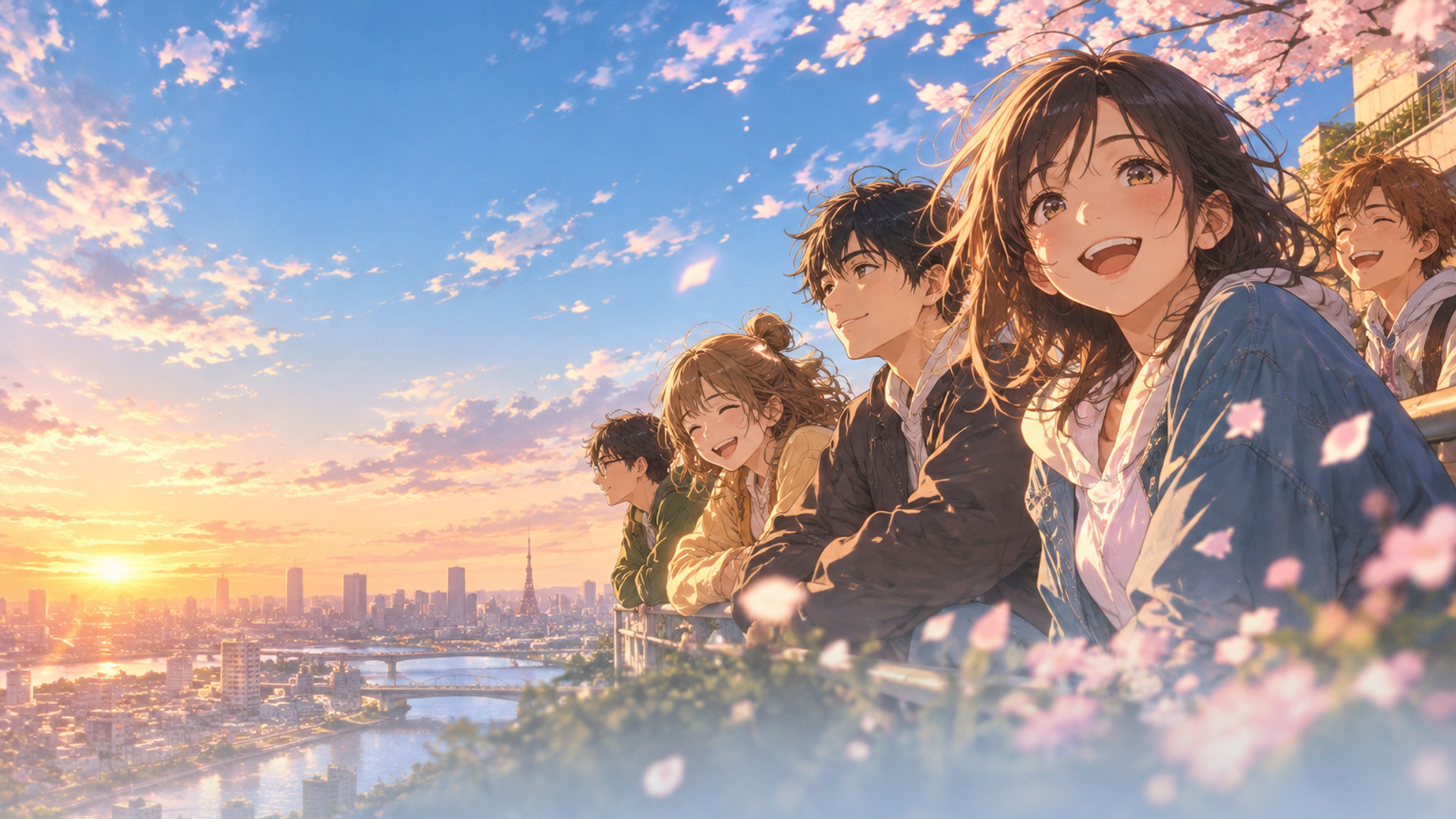
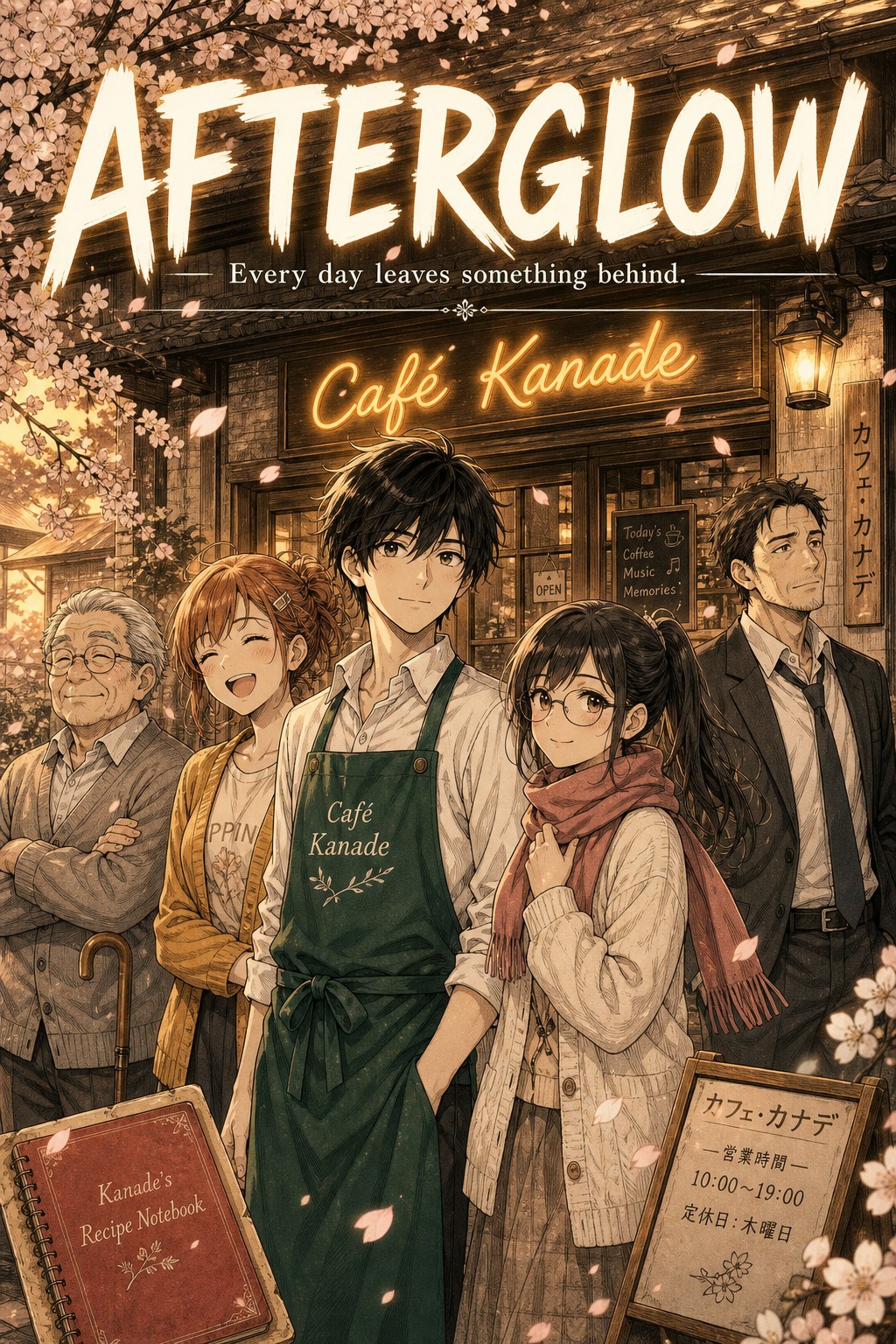
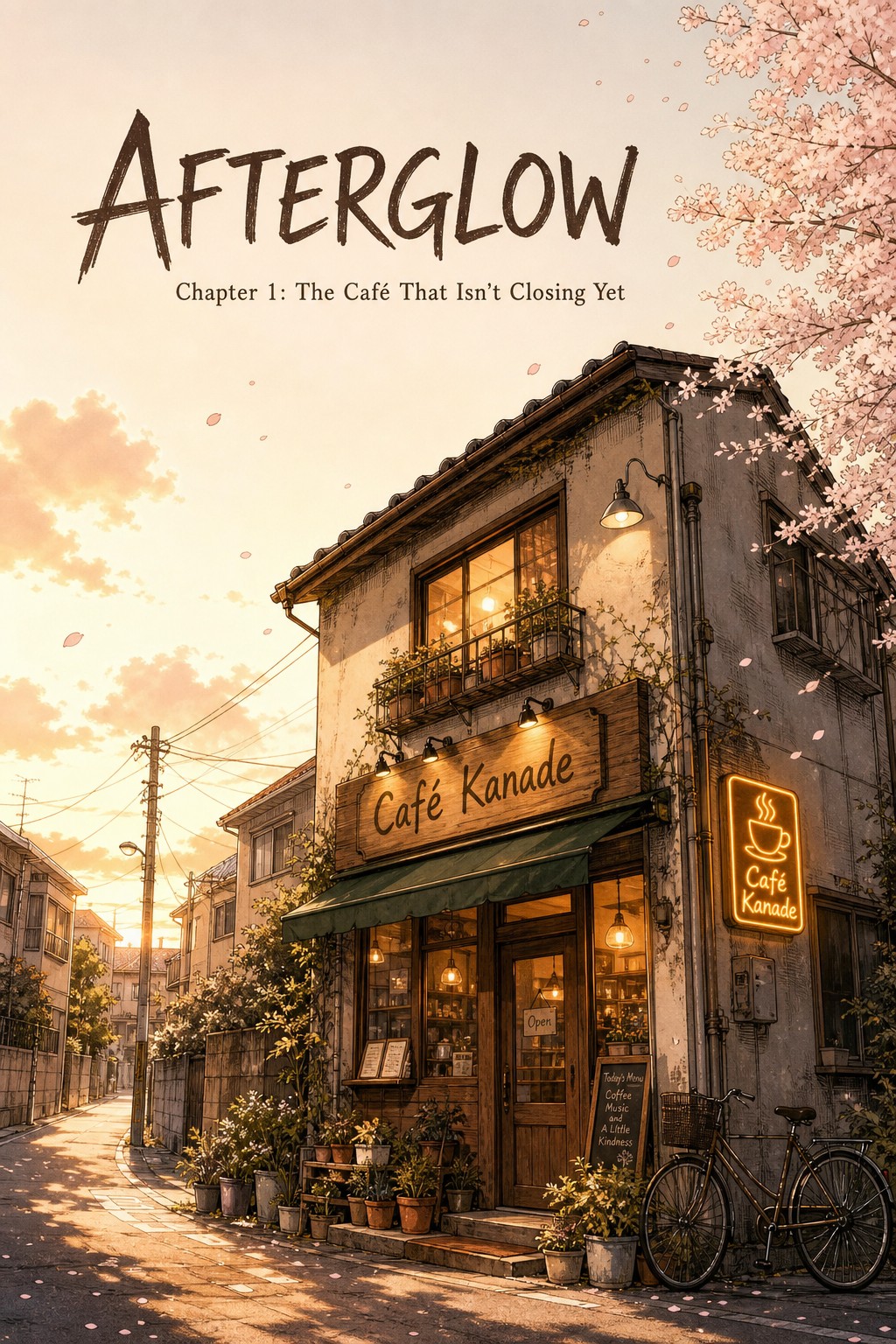
Afterglow Mangá e Quadrinhos de IA
Genre: Contemporary slice-of-life, drama, romance, comedy, human drama, ensemble character story Setting: Modern Japan, primarily a warm and vibrant contemporary city across the changing seasons. Tone: Heartwarming, funny, emotional, intimate, hopeful, occasionally bittersweet. A story designed to make the reader laugh, smile, and sometimes cry — not primarily from tragedy, but from moments of genuine human connection. The Core Concept Afterglow is a story about ordinary people and the extraordinary importance of being kind to one another. There is no great war to stop. No evil empire. No chosen hero. No world-ending threat. The world simply continues. People go to work. They meet friends. They fall in love. They argue. They struggle with loneliness, anxiety, grief, regret, insecurity, and the mistakes they've made in their lives. They celebrate birthdays, attend concerts, play games, drink coffee, walk through snowy streets, visit little shops, share meals, and occasionally do something completely ridiculous. And sometimes, one person makes another person's day just a little better. That is what Afterglow is about. The central philosophy is: "How can I leave this person's day a little better than I found it?" Every character has their own life, history, relationships, hopes, fears, and problems. Nobody exists simply to advance the protagonist's story. Characters continue living their lives even when they are not the focus of a chapter. The city itself should feel alive. A character mentioned briefly in one chapter might become important many chapters later. A seemingly insignificant conversation might change someone's behavior. A stranger helped on a rainy afternoon might eventually become a friend. Two people who haven't spoken in years might unexpectedly find each other again. The story should feel like the reader is looking through a window into a real community. The Central Theme Afterglow challenges the idea that "winning" requires somebody else to lose. Modern life often emphasizes competition: being richer, stronger, faster, more successful, more popular, or better than someone else. Afterglow presents another possibility: What if people measured success by how much good they could create together? Characters earn respect and happiness not by defeating others, but by helping them. Kindness is never portrayed as weakness. Compassion is not naive. Cooperation is not boring. Sometimes the strongest thing a person can do is simply be there for someone else. A character might risk embarrassment to help a lonely person. Someone might forgive another person. A stranger might help return a lost pet. Someone might notice that another person is struggling and quietly sit beside them without asking questions. These moments should matter. They can change relationships, open opportunities, and ripple outward through the community. Emotional Philosophy Afterglow should not rely on death or tragedy simply to make the audience cry. The most powerful emotional moments should come from hope, kindness, reconciliation, and connection. Examples: A person risks themselves to rescue someone's beloved cat. Two people separated by circumstances many years ago finally find one another. A father and son who have spent years struggling to understand each other finally begin rebuilding their relationship. One evening, the father quietly tells his son: "I'm proud of you." An elderly, seemingly rude and bitter man slowly becomes part of the community after people begin treating him with patience rather than hostility. Eventually, after months of small interactions, he genuinely thanks someone for not giving up on him. A lonely character discovers that people have been quietly looking out for them all along. A character who believes they have nothing meaningful to offer discovers that simply being themselves has made someone else's life better. These are the moments that should make the reader cry. Happy tears. The City The city is contemporary Japan with a distinctly modern Japanese aesthetic. It is beautiful without being fantastical. Apartment buildings, narrow streets, convenience stores, train stations, cafés, bookstores, arcades, restaurants, game stores, comic shops, parks, rooftop gardens, community centers, schools, offices, and quiet residential neighborhoods. The city changes with the seasons. Spring brings cherry blossoms, gentle rain, colorful umbrellas, school ceremonies, bicycles, and new beginnings. Summer brings festivals, fireworks, warm evenings, beaches, thunderstorms, convenience-store drinks, and late-night walks. Autumn brings golden leaves, cooler evenings, cozy cafés, festivals, and reflective moments. Winter brings snow-covered trees, scarves, mittens, winter coats, warm cafés, snowmen, Christmas lights, quiet streets, and the feeling of being bundled together against the cold. The city should feel lived-in. There should always be evidence that other people exist beyond the current scene. Characters The cast should be diverse in personality, age, background, interests, and outlook. There is no single "main character" in the traditional sense. Instead, Afterglow is an ensemble story where different characters take center stage at different times. Some are outgoing and chaotic. Some are shy. Some are analytical. Some are deeply spiritual. Some are sarcastic. Some are optimistic. Some hide their pain behind humor. Some struggle to connect with others. Some seem rude or difficult at first. Nobody is simply "the bad guy." Even unpleasant people should be treated as human beings with histories. A rude person may have learned cruelty because that was all they experienced growing up. A grumpy old man may simply be carrying enormous grief. A distant person may be terrified of being hurt again. A seemingly selfish person may never have learned how to think about others. Afterglow does not excuse harmful behavior, but it asks: "What happened to this person?" And sometimes, showing someone another way to live is enough to begin changing them. Relationships Relationships should develop naturally and gradually. Friendships should feel earned. Romances should grow through small moments rather than appearing instantly. Family relationships should be complicated and believable. Characters should tease one another, misunderstand each other, support each other, annoy each other, forgive each other, and occasionally sit together in comfortable silence. Characters should have recurring jokes and shared memories. A conversation from ten chapters ago can become an inside joke later. A small favor can become the beginning of a friendship. A character who was once a stranger can eventually feel like family. The audience should eventually know these people well enough that seeing them happy makes them happy too. Humor Afterglow should have plenty of comedy. Not every chapter should be profound. Characters should be allowed to be stupid. They should make terrible decisions. They should embarrass themselves. Friends should tease each other. Someone should absolutely destroy karaoke night. Someone should bring snacks to an event where they absolutely should not have brought snacks. A serious meditation session might somehow devolve into laughter. The humor should come naturally from personalities and relationships rather than forced jokes. Visual Style Modern Japanese manga aesthetic with beautiful expressive character art. Detailed backgrounds and environments. Strong sense of place. Cinematic panel composition. Expressive faces and body language. Use close-ups for emotional moments and wide environmental panels to establish the city. Characters should have distinctive silhouettes, hairstyles, clothing, accessories, and color identities. Although the manga may use traditional black-and-white manga conventions, occasional color illustrations, chapter covers, splash pages, phone screens, photographs, social-media posts, and other visual inserts can use vibrant modern colors. The visual tone should be somewhere between contemporary slice-of-life manga, emotional drama, and cinematic Japanese illustration. Avoid fantasy, supernatural elements, cyberpunk dystopia, excessive action, or grimdark aesthetics. This is a beautiful world because the people in it make it beautiful. The "Afterglow" The title has a specific meaning. Afterglow is not simply the light left behind by a sunset. It is the emotional trace a person leaves behind after an interaction. You help someone. You listen to them. You make them laugh. You forgive them. You give them hope. You make them feel seen. Then you walk away. But something remains. A tiny warmth. An afterglow. And perhaps that person carries that warmth into their next interaction with someone else. Then it spreads. One act of kindness becomes another. A community slowly changes, not because somebody saves the world, but because ordinary people continually choose to make each other's lives a little better. One Final Thought Afterglow is a story about the possibility that the world could be better if people stopped asking: "How do I win?" and started asking: "How can we win together?" It is about cooperation instead of competition. Compassion instead of indifference. Understanding instead of judgment. Connection instead of isolation. And the simple, radical idea that every person we encounter is fighting a battle we may know nothing about. Be kind, for everyone you meet is fighting a hard battle. Afterglow asks the reader to imagine a world where people genuinely tried to live by that idea. Not a perfect world. Not a world without sadness. Just a world where, whenever possible, people tried to leave each other a little warmer than they found them. That is Afterglow.
Capítulos de Mangá e Quadrinhos IA
Mais como este
Ainda não há nada parecido.