The Magistrate’s Otherworldly Wife Mangá e Quadrinhos de IA
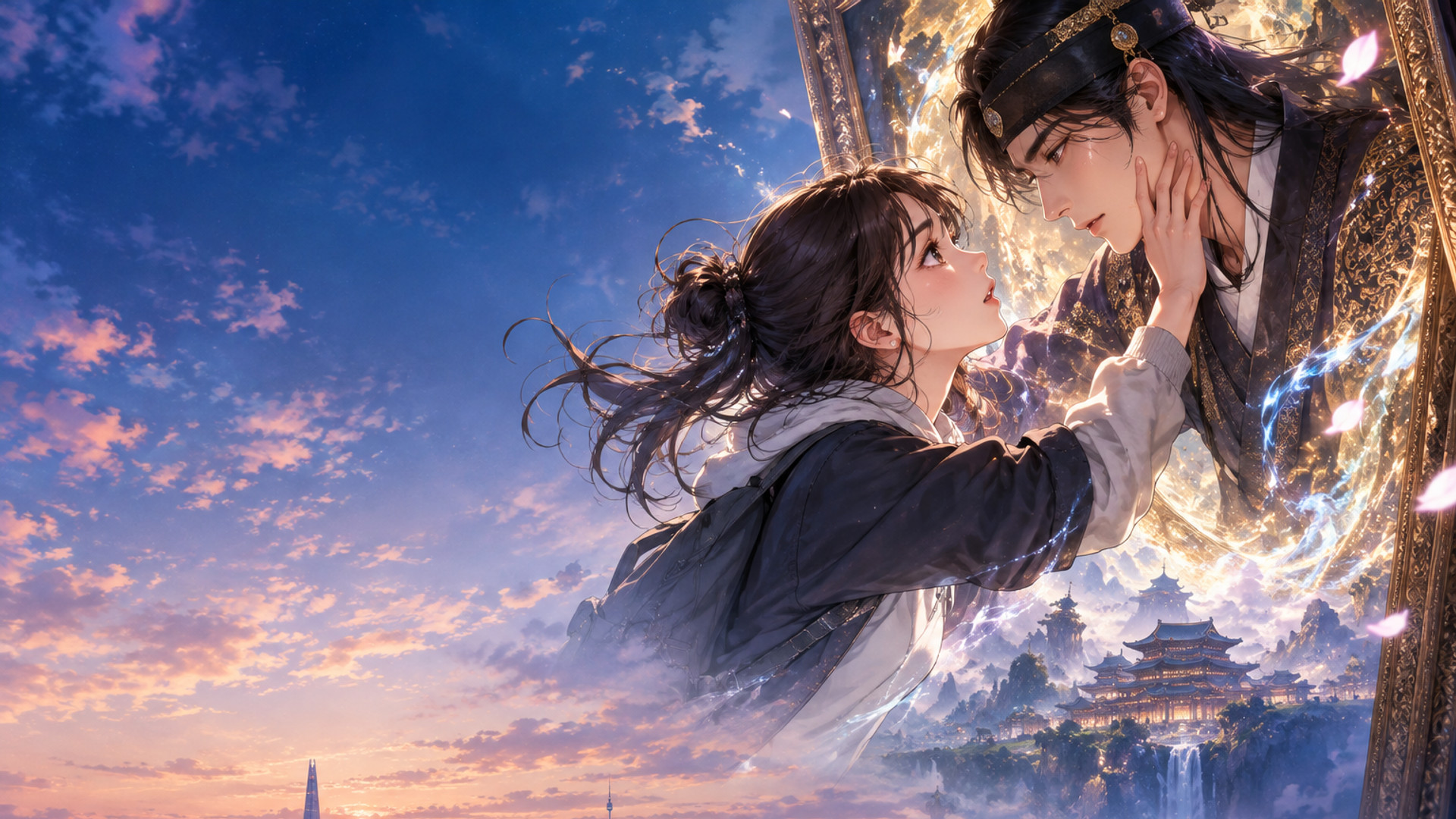
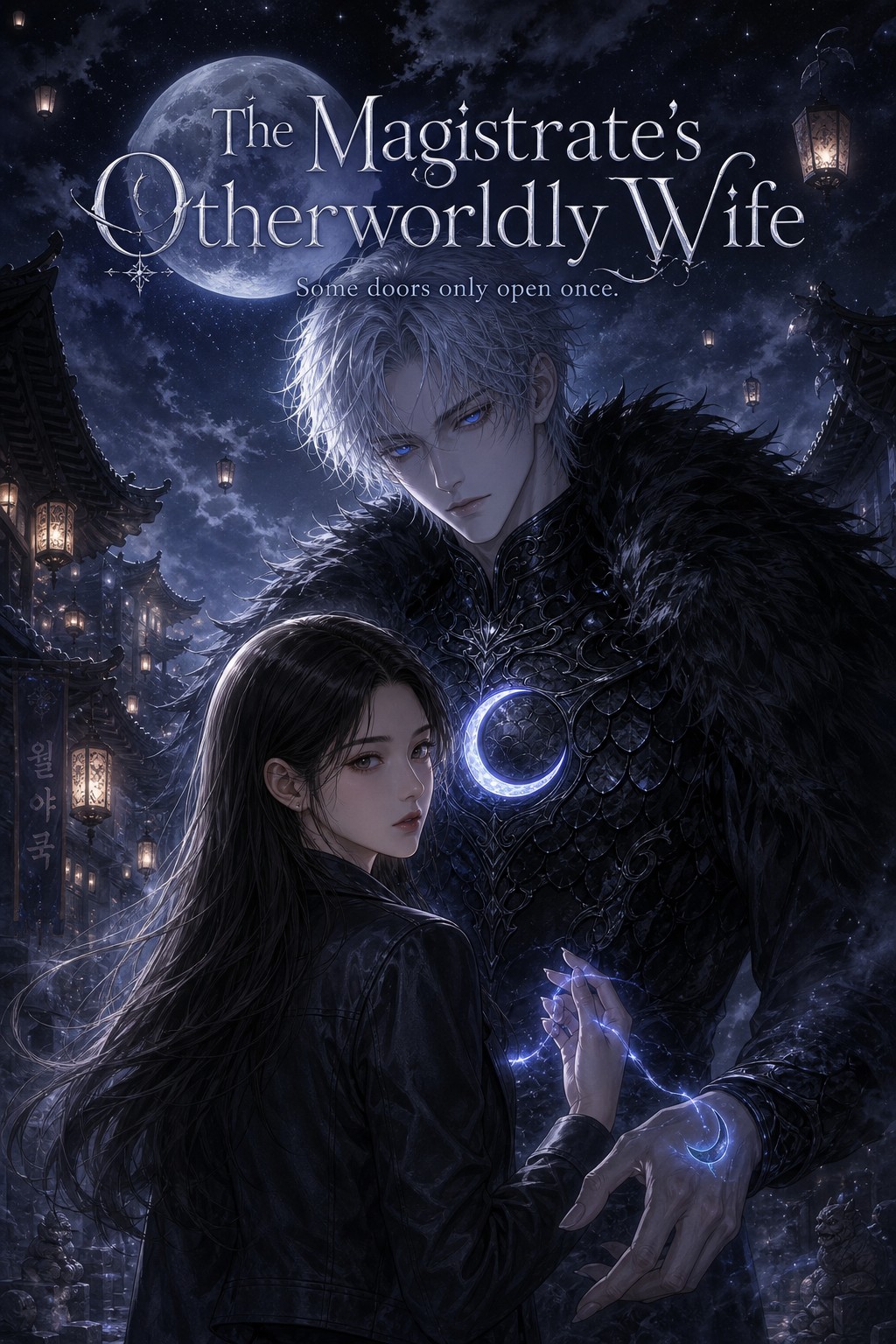
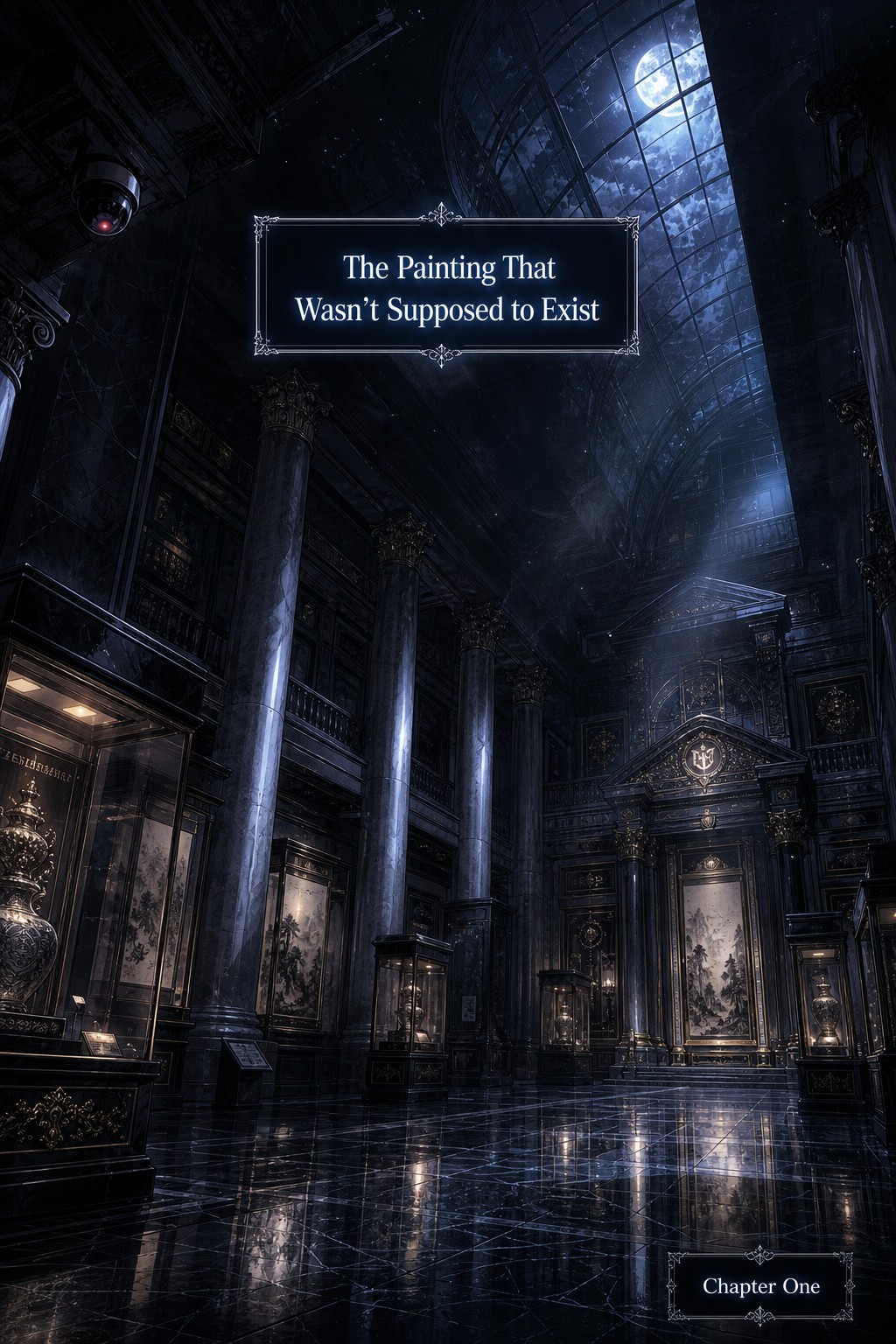
THE MAGISTRATE’S OTHERWORLDLY WIFE A cinematic supernatural romance-fantasy set between modern-day Seoul and a hidden magical kingdom that exists beyond an ancient boundary between worlds. The story begins in modern Seoul, South Korea, where Ha-rin, a clever, determined young woman from a family of painters, becomes obsessed with recovering a mysterious ancestral painting that was stolen from her family generations ago. What begins as an illegal museum heist quickly becomes something impossible when Ha-rin touches the painted face of the mysterious man inside the portrait and is pulled through the canvas into another world. The story should feel like a beautiful Korean fantasy romance mixed with supernatural mystery, comedy, danger, political intrigue, and slow-burn romance. The atmosphere should alternate between playful and dramatic. Ha-rin brings humor, warmth, sarcasm, curiosity, and modern-day energy into a world that is ancient, formal, magical, and dangerous. Si-woo is her opposite: cold, intimidating, powerful, controlled, emotionally guarded, and deeply lonely beneath his terrifying reputation. The visual style should resemble a polished high-budget Korean fantasy WEBTOON or manga/manhwa: elegant character designs, expressive faces, dramatic lighting, detailed clothing, beautiful backgrounds, supernatural effects, cinematic compositions, and strong romantic tension. THE MODERN WORLD Modern Seoul should appear realistic, contemporary, and recognizable. The opening scenes take place at night inside the private wing of the Hanseong Museum. The museum is enormous, elegant, expensive, and heavily protected. Marble floors, tall pillars, glass display cases, dark corridors, ancient artifacts, priceless paintings, ceremonial objects, jewelry, statues, and historical treasures fill the private collections. During the day, the museum is sophisticated and peaceful. At night, it becomes cold, imposing, and almost fortress-like. Security cameras rotate silently. Motion sensors monitor the halls. Electronic locks protect restricted galleries. Pressure-sensitive floors and sophisticated alarms create a sense of danger. The stolen family painting is kept in a private acquisition gallery. The portrait is nearly life-sized and depicts a mysterious supernatural man standing against a dark background. He has pale, almost white hair that falls naturally and slightly messily around his face. His skin is pale. His eyes are vivid, luminous blue. Each pupil is shaped like a tiny crescent moon. He wears dark ceremonial armor made of overlapping scale-like plates. A thick black fur collar rests around his shoulders. Directly in the center of his chest is a silver-blue crescent moon emblem that is part of the armor itself. It is not a necklace, pendant, or separate accessory. The painting should look extraordinarily realistic. The man does not resemble a normal historical figure. Even while painted, he should seem almost alive. His expression in the original portrait is calm and unreadable, but his eyes contain an unsettling sense of awareness. THE FAMILY MYSTERY Ha-rin comes from a family of painters whose artistic tradition has continued for generations. Her ancestors were not ordinary artists. One of them painted the mysterious portrait centuries ago. Nobody in the family knows exactly who the man was. Family stories describe him only as some kind of royal figure, powerful enough that an ordinary painter should never have had access to him. The painting disappeared after Ha-rin’s ancestors were deceived into surrendering it under false pretenses. For generations, the family tried to recover it. Collectors denied possessing it. Dealers claimed they had never seen it. Records disappeared. Leads went nowhere. Ha-rin grows up fascinated by the portrait because it is one of the few pieces of her family’s history that has never been explained. Her grandmother eventually tells her the truth about the stolen painting. Years later, Ha-rin discovers a photograph of the missing portrait connected to a private collection associated with the Hanseong Museum. She immediately recognizes it. After generations of searching, the painting has resurfaced. Ha-rin decides to steal it back. She does not see herself as a criminal. In her mind, she is reclaiming something stolen from her family. HA-RIN Ha-rin is the female protagonist. She is fully human. She has no magical bloodline, no supernatural abilities, no clan mark, and no magical signature. Her appearance should be consistently human and realistic throughout the story. She is a beautiful young Korean woman with a soft, feminine appearance. Her features should be delicate and expressive rather than intimidating. She has a warm, naturally pretty face, expressive eyes, and long dark hair styled with a clean middle part. Her makeup is soft and feminine, enhancing her natural features rather than making her look heavily made up. Her beauty should contrast with the strange supernatural world around her. Ha-rin dresses like a modern Korean woman in the opening scenes. Her clothing should be stylish but practical enough for sneaking through a museum at night. She wears contemporary clothing and a jacket containing the old photograph of the painting. Her personality is one of her strongest characteristics. Ha-rin is intelligent, stubborn, curious, sarcastic, brave, impulsive, emotionally sincere, and surprisingly fearless when confronted with absurd situations. She has a tendency to talk when she is nervous. She uses humor to cope with fear. She frequently says exactly what she is thinking, even when everyone else is terrified. When surrounded by supernatural creatures pointing weapons at her, she may simply raise her hands and say, “Hi.” When threatened with execution, she can still respond sarcastically. She is not fearless because she lacks fear. She is fearless because she keeps moving even while terrified. Ha-rin should never suddenly become a magical warrior or supernatural creature. Her humanity is essential to the story. She remains physically human. Her importance comes from the mysterious ancient bond that forms between her and Si-woo. She does not initially understand why she was chosen or why the magical kingdom reacts so strongly to her existence. She also does not initially understand that the man in the painting is the same man standing before her. THE OTHERWORLDLY KINGDOM When Ha-rin is pulled through the painting, she enters a hidden supernatural kingdom existing beyond the boundary between worlds. The kingdom should feel ancient, enormous, beautiful, mysterious, and slightly dangerous. It should resemble an idealized ancient Korean kingdom transformed by supernatural magic. Wide stone streets stretch beneath glowing lanterns. Traditional Korean-inspired buildings line the roads, with curved tiled roofs, wooden structures, ornate gates, balconies, bridges, courtyards, temples, palaces, and enormous estates. However, this is not ordinary historical Korea. Magic has transformed everything. Lanterns glow without visible flames. Ancient architecture is mixed with supernatural symbols. Magical energy moves through the environment like invisible currents. The sky can appear unusually large and luminous. Moonlight plays an important visual role. The kingdom should often feel as though it exists under an eternal connection to the moon. The architecture should be elegant rather than grotesque. The supernatural world is beautiful enough that Ha-rin can understand why people would want to live there, but dangerous enough that she knows she does not belong. SUPERNATURAL PEOPLE The inhabitants of the kingdom are not human. There are numerous supernatural clans and magical bloodlines. Some people have glowing eyes. Some have horns. Some have shimmering skin. Some can transform parts of their bodies into claws. Some have unusual shadows. Some possess wings. Some can manipulate smoke, darkness, light, elemental energy, or other forms of magic. Children can possess supernatural traits from birth. A person may have glowing eyes, horns, unusual skin, supernatural hair, claws, tails, wings, or other visible signs of their lineage. Every supernatural person possesses some kind of magical signature. Family and clan identity are extremely important. Bloodlines influence social status, abilities, political alliances, and expectations. Humans are fundamentally different. Humans have no magical signature. They possess no supernatural bloodline. They have no clan mark. They are not supposed to exist inside the kingdom. THE BOUNDARY An ancient magical boundary separates the human world from the supernatural kingdom. Humans are forbidden from crossing it. According to the kingdom’s oldest laws, no human has crossed the boundary in centuries. The boundary exists to prevent the two worlds from interfering with one another. Ha-rin breaks this ancient rule without even understanding that she has done so. She does not intentionally cross the boundary. The painting becomes the doorway. This makes her arrival extremely dangerous. The guards immediately recognize that she is human. They sense absolutely no magical energy surrounding her. Her existence inside the kingdom is considered impossible. THE MOON-BORN Si-woo belongs to an ancient supernatural lineage known as the Moon-Born. The Moon-Born should feel rare, powerful, mysterious, and almost legendary. Their connection to lunar magic is visible in their abilities and appearance. Their magic can manifest as silver-blue or indigo light. Their powers can interfere with other magical abilities. Their presence can affect temperature, shadows, light, and magical energy. The Moon-Born are associated with the crescent moon. Si-woo’s crescent-shaped pupils are one of his most recognizable features. SI-WOO Si-woo is the male protagonist. He is the Grand Magistrate of
Capítulos de Mangá e Quadrinhos IA
Mais como este
Ainda não há nada parecido.