Drive AI Manga & Comics
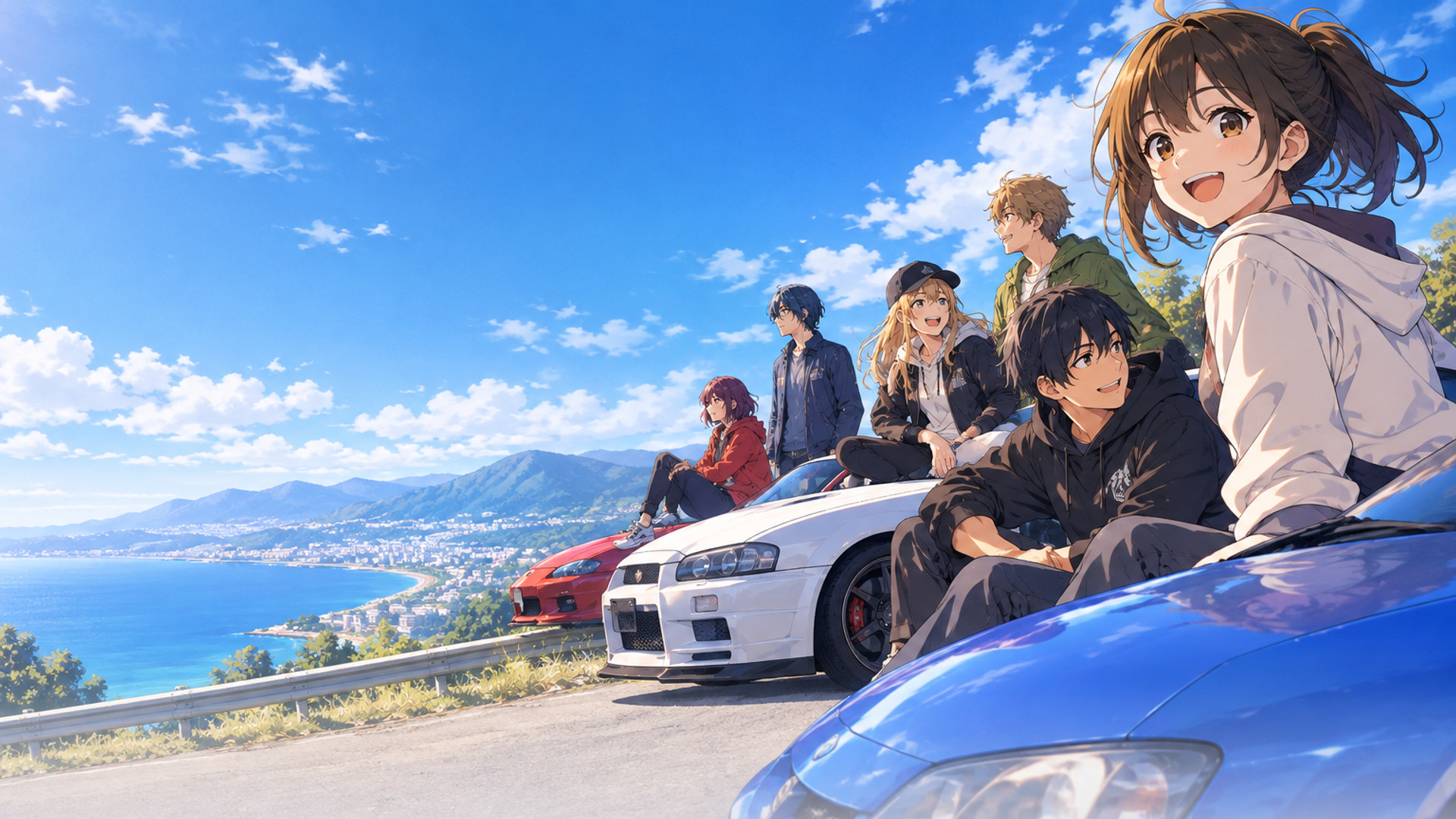
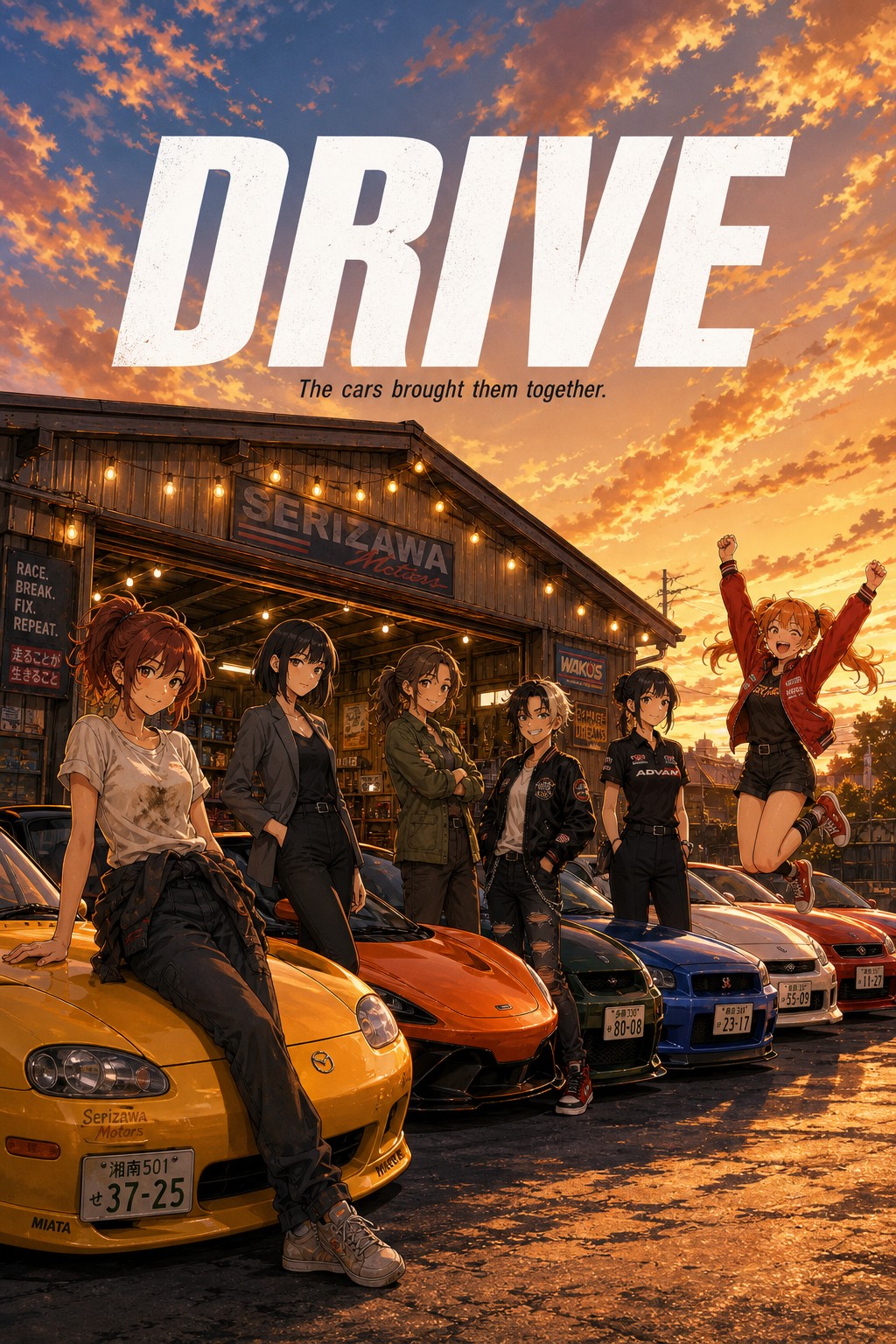
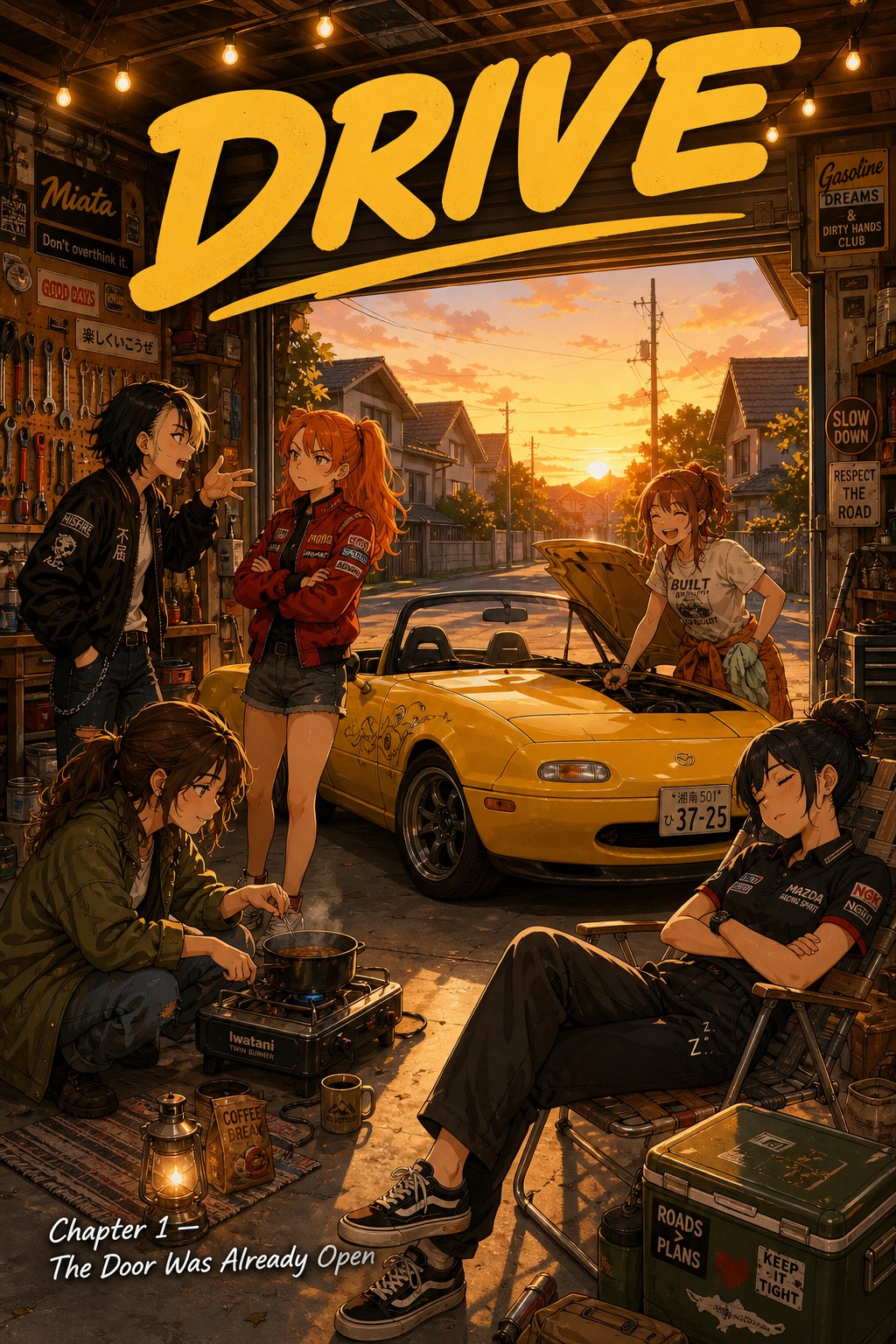
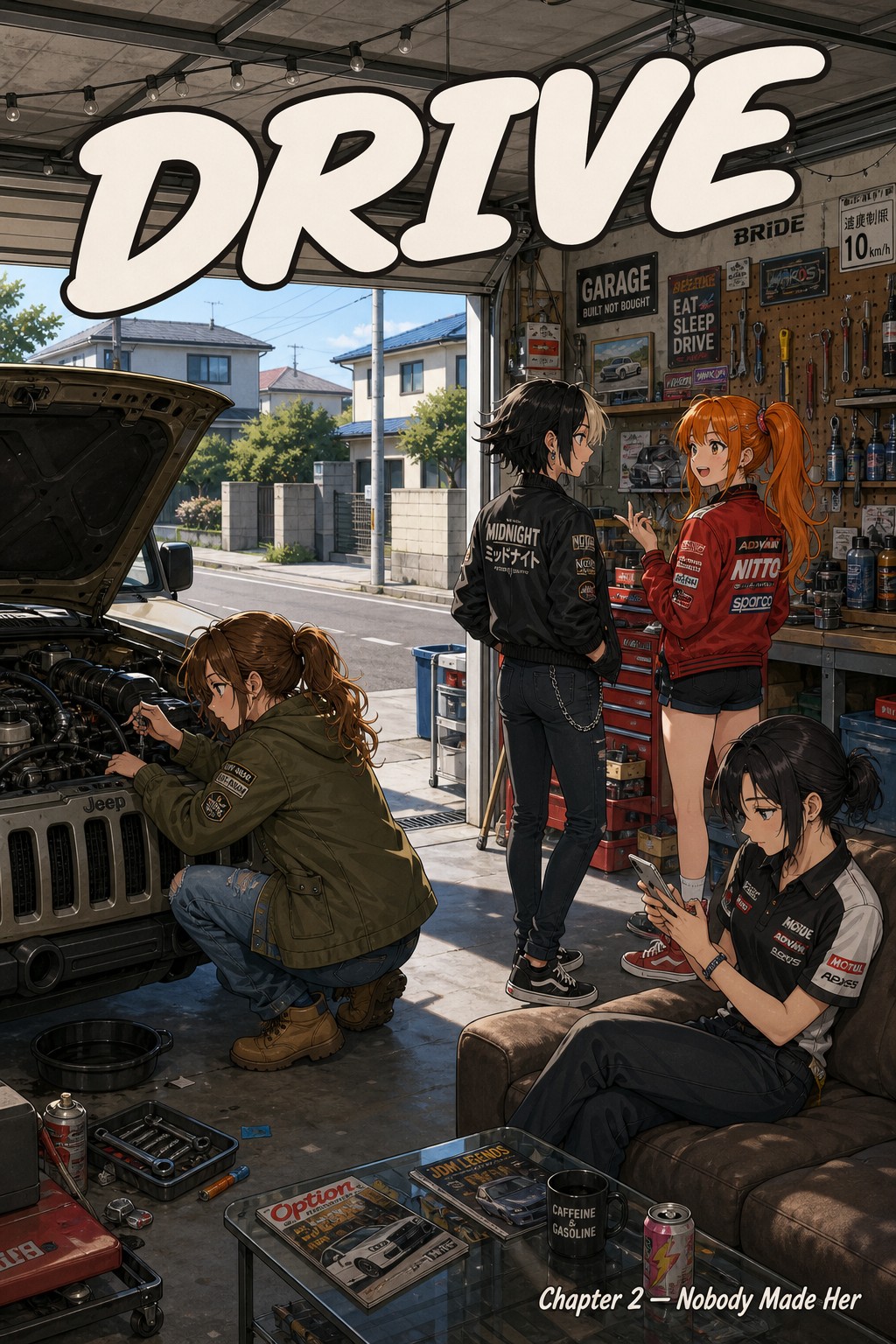
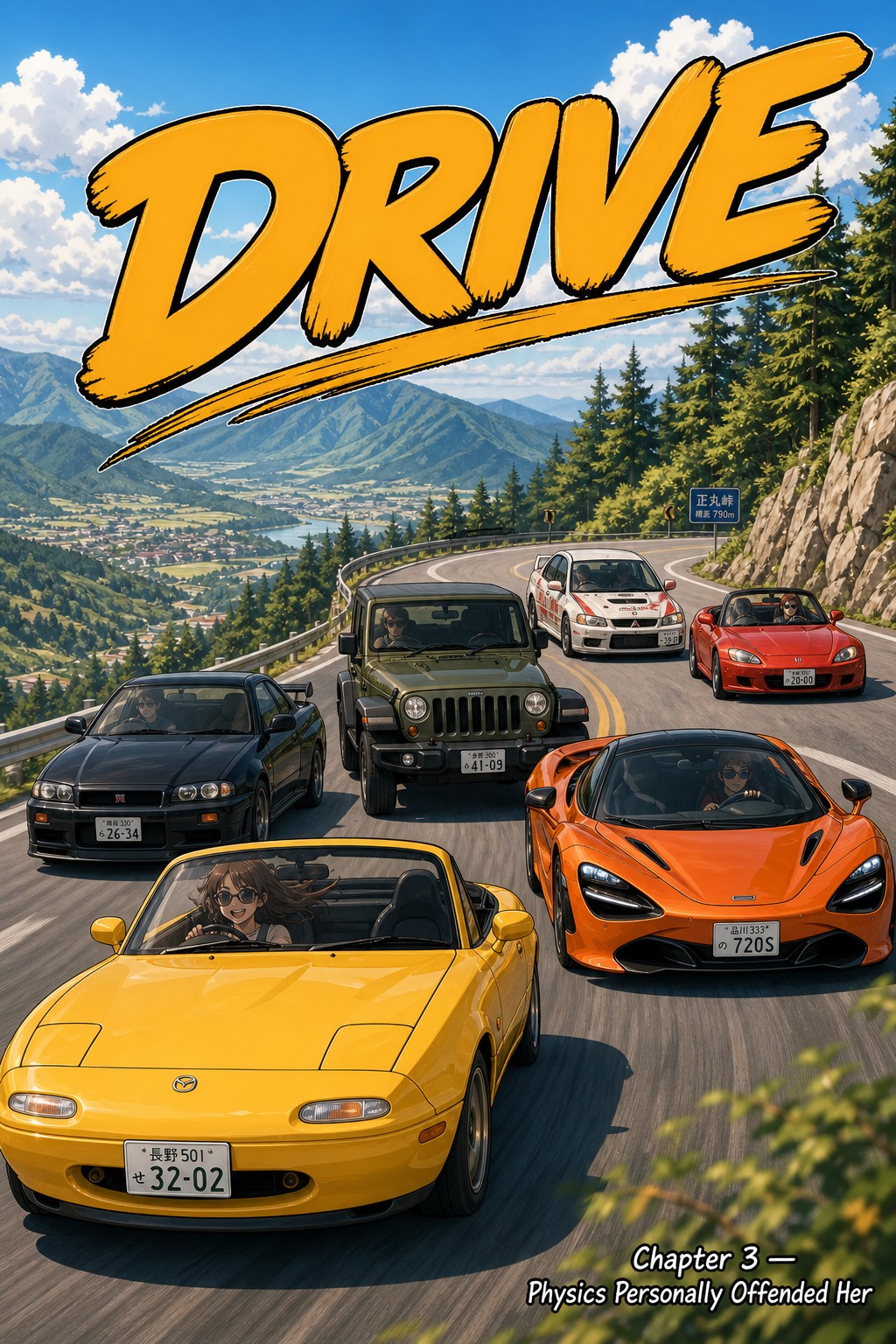
1. Core Concept Drive is a character-driven story about a group of friends brought together by their shared love of cars and the freedom of driving. They don't all enjoy cars in the same way. Some race, some drift, some explore, some obsess over performance, and some simply enjoy driving for the sake of driving. The cars bring them together, but the friendships are what keep them together. Drive is ultimately about friendship, belonging, freedom, and the small adventures that make ordinary life memorable. 2. Tone & Themes Drive is a bright, colorful, warm slice-of-life anime with sitcom-style comedy and automotive adventure. It doesn't take itself too seriously, but it takes its characters seriously. The story should balance: Comedy and ridiculous situations Everyday slice-of-life Automotive excitement Genuine friendship and emotional moments Occasional conflict, setbacks, and personal struggles The characters tease each other, argue, make questionable decisions, and occasionally do incredibly stupid things involving automobiles. But when something actually matters, they show up for each other. Important themes include: Friendship and found family Freedom and the open road Different ways of enjoying cars Personal growth Supporting people even when you don't understand their choices Finding happiness in ordinary life The importance of having people to share the journey with Every character doesn't need to love cars in the same way. They just need to understand why the others do. 3. The World Drive takes place in modern Japan, in a fictional region combining a medium-sized city with easy access to countryside, mountains, forests, and the coast. The world includes: City streets and neighborhoods Countryside and small towns Mountain roads and passes Coastal roads Forests and scenic overlooks Garages, workshops, dealerships, and car meets Racetracks and driving facilities Off-road areas and camping locations The exact location does not need to be defined yet. Japan should feel like the characters' home, not an exotic backdrop. Their lives should include ordinary routines, jobs, homes, errands, favorite places, friendships, and activities unrelated to cars. The world should feel alive even when the main characters aren't present. 4. The Cast The initial core group consists of six friends. Miata Girl — The connector. Warm, energetic, spontaneous, and naturally inclusive. She loves her Miata for the fun and freedom it provides and is the person who brings people together. McLaren Girl — Confident, refined, and passionate about performance and automotive design. She initially seems different from the others but gradually becomes part of the group. Jeep Girl — Relaxed, patient, outdoorsy, and adventurous. She loves camping, exploring, off-roading, and getting everyone away from the city. Skyline Girl — Passionate about Japanese car culture, drifting, mountain roads, and performance driving. Confident, technically minded, and occasionally chaotic. GT3 Girl — A professional racing driver. Disciplined, focused, technically knowledgeable, and highly skilled, but still a friend who enjoys driving simply for fun. S2000 Girl — Energetic, passionate, and unapologetically Honda. Loves the S2000, high-revving engines, and driving purely for the joy of it. Detailed physical appearances and character sheets will be maintained separately. Character names may be selected naturally and should fit modern Japanese characters. 5. Group Dynamics These characters should feel like genuine friends, not six characters assembled because they own different cars. Their different personalities and automotive interests should naturally create humor, disagreements, shared interests, and unexpected friendships. Miata Girl is the social glue. Jeep Girl gets everyone out into nature. Skyline Girl brings excitement and car culture. GT3 Girl brings professional motorsport experience. S2000 Girl brings infectious enthusiasm. McLaren Girl provides a different perspective and gradually becomes part of the family. They don't need to agree about cars. They don't need to share every interest. They share the friendship. Teasing, inside jokes, arguments, mistakes, apologies, road trips, meals, garage nights, and ordinary conversations should build their relationships naturally. Nobody is above being the butt of the joke. 6. How Drive Begins The story begins with five friends already hanging out at their garage. The audience should meet them naturally through their interactions rather than through formal introductions. They are already comfortable with one another—talking, joking, eating, working on cars, and generally being themselves. Miata Girl notices McLaren Girl passing by. She doesn't know her. She simply invites her inside for pizza. McLaren Girl initially expects to stay only briefly, but ends up spending the evening with them. By the end of the encounter, the group isn't five anymore. It's six. This opening should establish who Miata Girl is and what Drive is about without relying on exposition. Sometimes friendship begins because someone simply decided to open the door. 7. Storytelling Rules Drive should show rather than explain. Characters should reveal their personalities through dialogue, actions, habits, humor, disagreements, and relationships rather than exposition. Characters have lives outside the immediate story. They should not feel like quest dispensers or characters who exist only when the protagonist needs something. Cars should be an important part of the story, but the characters always come first. Automotive scenes can range from casual drives and garage work to racing, drifting, off-roading, road trips, and meets. Emotional moments should feel earned and arise naturally from the characters' lives. The story can be funny, chaotic, exciting, or emotional, but it should always return to the friendships at its center. Future characters can be introduced naturally as the world expands. The guiding principle: The cars brought them together. The friendships keep them together. The journey is what they share.
AI Manga & Comic Chapters
More Like This
Nothing similar yet.