Krooklyn Wolf Manga y Cómics IA
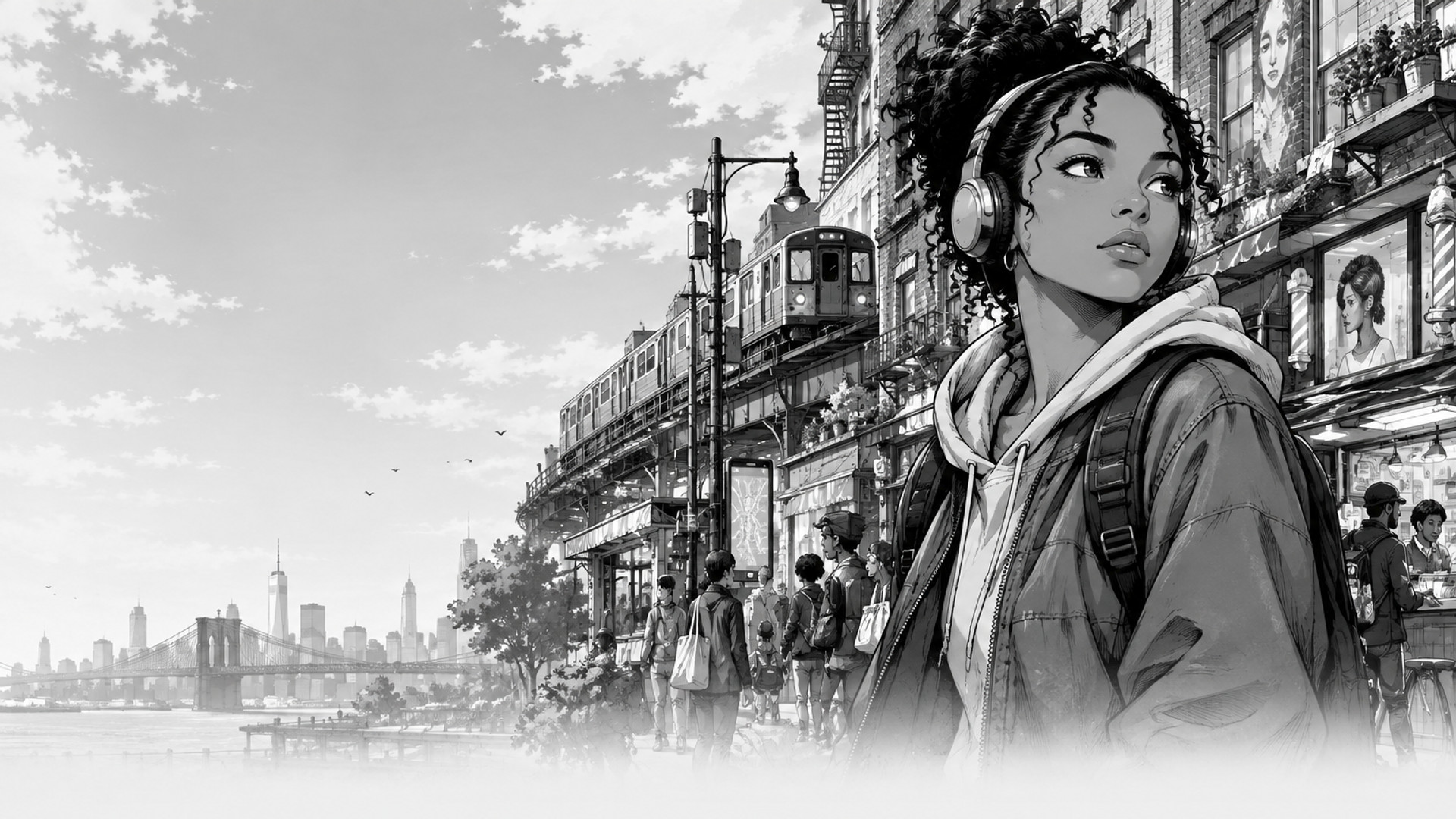
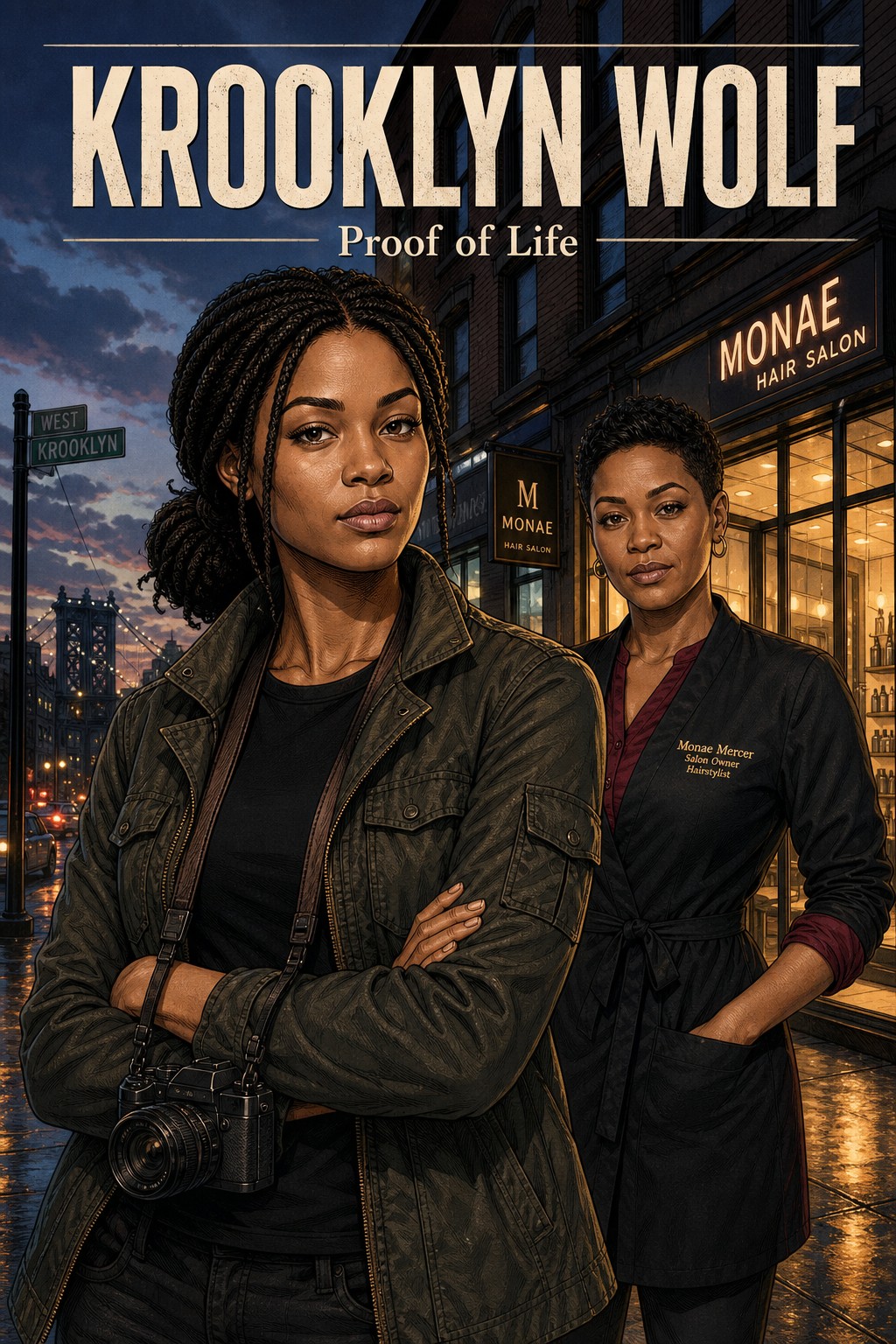
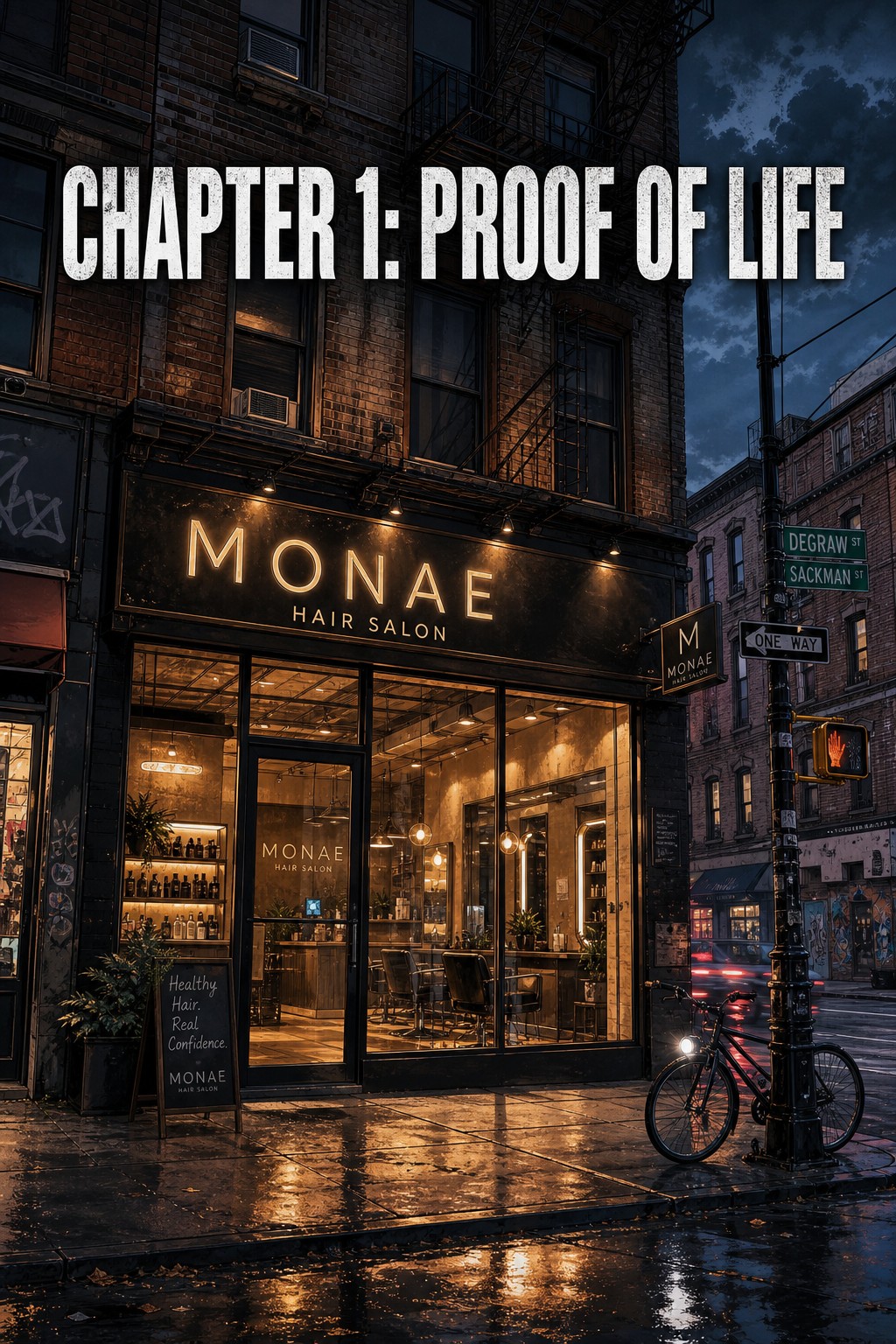
Krooklyn is a dense, lived-in near-future city where history has never disappeared; it has simply been built over, repaired, renamed, rerouted, and incorporated into whatever came next. The city should feel recognizable before it feels futuristic. Old brick storefronts sit beneath renovated apartments. Aging municipal infrastructure runs beside newer transit interfaces. Handwritten notices compete with digital displays. Neighborhood businesses, beauty salons, food counters, delivery riders, pedestrians, artists, workers, families, and commuters create the everyday rhythm of the streets. New glass construction intersects with old masonry without completely matching it. Repairs remain visible. Different generations of architecture exist beside each other like layers of memory. The visual tone is cinematic urban realism with subtle speculative tension. Nothing should initially appear magical, supernatural, dystopian, or overtly science-fiction. Krooklyn feels alive because of people, accumulated history, infrastructure, commerce, sound, light, and texture. Mystery emerges through observation. Ordinary things become unsettling only when someone notices a pattern that should not quite be there. The story centers on Imani Mercer, 27, a visual artist, photographer, installation designer, and creative worker rebuilding her life after the collapse of her first major exhibition. Imani is intelligent, observant, inventive, stubborn, visually sensitive, and accustomed to solving problems with whatever materials are available. She notices composition everywhere: reflections, architecture, negative space, damaged surfaces, pedestrian movement, lighting, signage, and the accidental geometry of the city. She is not mystical or chosen in her own mind. When something strange happens, her instinct is to document it, photograph it, compare it, and determine whether there is a rational explanation. Imani is preparing a new exhibition called PROOF OF LIFE, opening in twelve days. This project represents her attempt to return after a serious professional and financial failure. Her previous exhibition collapsed after venue problems, lost money, fabrication expenses, logistical failures, and expanding dependencies. She has redesigned Proof of Life to be smaller, transportable, financially controlled, and technically achievable. She believes she has learned from the previous disaster. Her older sister, Monae Mercer, 34, is the owner and operator of MONAE, a neighborhood hair salon in West Krooklyn. Monae is practical, precise, observant, disciplined, loving without being sentimental, and deeply protective of the stability she has built. She understands Imani better than almost anyone, which also means she recognizes Imani’s destructive patterns before Imani wants to admit them. Their relationship should never feel like a simple responsible-sister/reckless-sister stereotype. They love each other, work well together, tease each other, irritate each other, and carry the memory of surviving Imani’s previous collapse together. MONAE is warm, functional, beautiful, and unmistakably used. It is not an exaggerated luxury salon. Mirrors multiply the narrow room. Styling chairs sit at organized stations. Product bottles line shelves. Shampoo basins occupy the rear. Dryer hoods, cords, capes, towels, combs, disinfectant, setting foam, oils, retail jars, payment equipment, appointment materials, and cleaning supplies create visual texture. Through the front glass, West Krooklyn commerce remains visible: pedestrians, bicycles, shopping bags, traffic lights, storefront signage, and evening reflections. Chapter One begins near closing time. Imani is photographing one of Monae’s clients after her hair appointment. She moves a ring light three inches and immediately ruins the image. The client’s forehead becomes too shiny. Product bottles multiply in the mirror. A silver dryer hood appears behind her shoulder. Monae’s elbow enters the edge of the frame while holding a comb. Imani tells the client, “Don’t move.” The client answers, “I didn’t.” Imani replies, “That was for the room.” This moment establishes the sisters’ humor and Imani’s way of seeing. The problem is not the person. The problem is the environment around her. Instead of accepting the artificial ring light, Imani improvises. She unplugs it, opens the salon’s front door, and uses the fading street light. She takes a narrow cream display board intended for MONAE’s price menu and angles it so it reflects soft light back toward the client. Monae says, “That’s my sign.” Imani says, “For thirty seconds it’s a bounce.” Monae reminds her that prices are printed on it. Imani responds, “On the side the camera cannot see. This is called integrity.” Imani crouches lower and changes the composition. The dryer hood disappears. The ceiling vent disappears. Most of the product shelf disappears. The final photograph holds the client’s profile, the clean line of Monae’s hairstyling, and a blurred strip of West Krooklyn moving outside the glass. The resulting photograph should feel intimate and human. Imani sees something beyond a beauty photograph: a person leaving somewhere newly arranged. The client immediately recognizes the strongest image. Monae recognizes it too. Imani selects it before everyone can become distracted by nearly identical alternatives. After the client leaves, the salon changes character. It does not become silent. It becomes mechanical. A dryer continues humming in the rear. Ventilation grumbles above the shampoo basins. Music plays softly despite conversation having stopped. Mirrors no longer multiply customers and personalities; instead they multiply evidence of labor: loose hair, fingerprints, crooked retail jars, discarded capes, cords, cleaning tools, and empty chairs. The sisters begin their closing routine. Monae notices everything. Imani loosely loops the ring-light cord. Monae points out that “loosely” is not the same as “put away.” Imani fixes it. She sweeps hair from the floor. A small silver hair cuff rolls from beneath a waiting bench, and Imani places it into a lost-item dish beside an abandoned hoop earring and a key nobody has claimed. This environment should establish MONAE as a functioning real-world institution inside Krooklyn. The salon has routines, systems, clients, history, and rules. Imani’s phone vibrates. A calendar notification reads: PROOF OF LIFE — 12 DAYS Below it is a production message: “Need final transport footprint tonight. Can the narrow frames travel flat?” Imani dismisses the notification without answering. She believes she needs to inspect one repaired frame before she can respond accurately. Then the front door opens. A courier stands outside holding a long object wrapped in cloudy plastic and a moving blanket. He asks for Imani. Monae immediately stops what she is doing. The wrapped object is narrow enough to enter the salon but long enough to become inconvenient. Imani helps the courier guide it through the door. Monae asks: “Inside where?” The question is aimed at Imani, not the courier. They lean the object against the wall beyond the waiting area, where it partially covers MONAE’s framed service list. After the courier leaves, Monae asks how long it will remain there. Imani says until tomorrow afternoon. Monae asks whether “tomorrow afternoon” means an actual scheduled pickup or whenever someone with a van remembers her. Imani insists the van is confirmed. Monae examines the object. “What is it?” “A frame.” “I can see that it’s frame-shaped.” Monae pulls back part of the plastic. Underneath is an aluminum exhibition frame. Most of its old black finish has been removed. One corner has been repaired where Imani shortened the original structure. Old mounting holes remain visible. Adhesive has left a rectangular shadow. A fragment of an inventory label survives beneath the new wrapping. Monae recognizes it. She helped carry this frame out of the first failed exhibition. This should be a quiet recognition rather than a dramatic flashback. Monae simply stops asking what the object is. Imani says: “It’s smaller now.” Monae lets the plastic fall back into place. “Finish closing.” The sisters continue working around the frame. Because of the salon mirrors, the wrapped object repeats throughout the room, appearing behind different chairs and stations. Visually, the frame becomes difficult to escape even though it remains completely ordinary. Eventually Monae says: “You didn’t say anything was coming here.” Imani answers that it is leaving tomorrow. Monae responds: “That does not answer what I said.” Imani explains that she did not know the delivery would arrive so late. Monae asks the real question: “Did you know they were dropping it here?” Imani does not answer immediately. She had routed the frame through MONAE because its former storage location needed it removed, the new workspace would not accept deliveries outside staffed hours, and using the salon eliminated an additional transportation charge. Every practical reason makes sense. None of them includes asking Monae. Imani finally says: “I should’ve told you.” Monae answers: “You should’ve asked me.” Imani says, “Okay.” Monae replies: “That’s not the same word.” Then comes the chapter’s emotional accusation: “You’re doing it again.” Imani responds: “No. I’m finishing it.” The argument should reveal history without turning into exposition. Monae remembers the previous exhibition: the lost deposit, fabrication paid for too early, venue promises, extensions, delays that eventually became cancellation, and the moment she helped Imani move the remains of the failed project using borrowed vehicles. Imani sees the same frame differently. The original structure was twice as large. She has shortened it. Reinforced the corner. Reduced the weight. Redesigned the installation. It can now travel flat. To Imani, the repair
Capítulos de Manga y Cómics IA
Más como esto
Aún no hay nada similar.


